Down the Rabbit Hole
This morning I fell down a rabbit hole on X.
Post after post from creators who had lost everything overnight.
Twenty years of content. Audiences built video by video, year by year. Gone.
Account terminated. No warning. No explanation. No one to call.
I sat with that for a while.
Because I recognised what I was reading.
Not as a technology story.
As a power and control story.
A Framework You Already Know
In my work with women recovering from domestic and family violence, one of the most important frameworks we work with is the Power and Control Wheel.
It maps the tactics that keep someone trapped in an abusive dynamic.
- Isolation
- Economic control
- Removing access to support networks
- Denying and minimising harm
- Creating dependency
- Ensuring there is no voice, no recourse, no exit that doesn’t cost you everything
I want to ask you something.
When was the last time you thought about your relationship with the platforms you build on, in those terms?
Because here is what I see when I look at it through that lens.
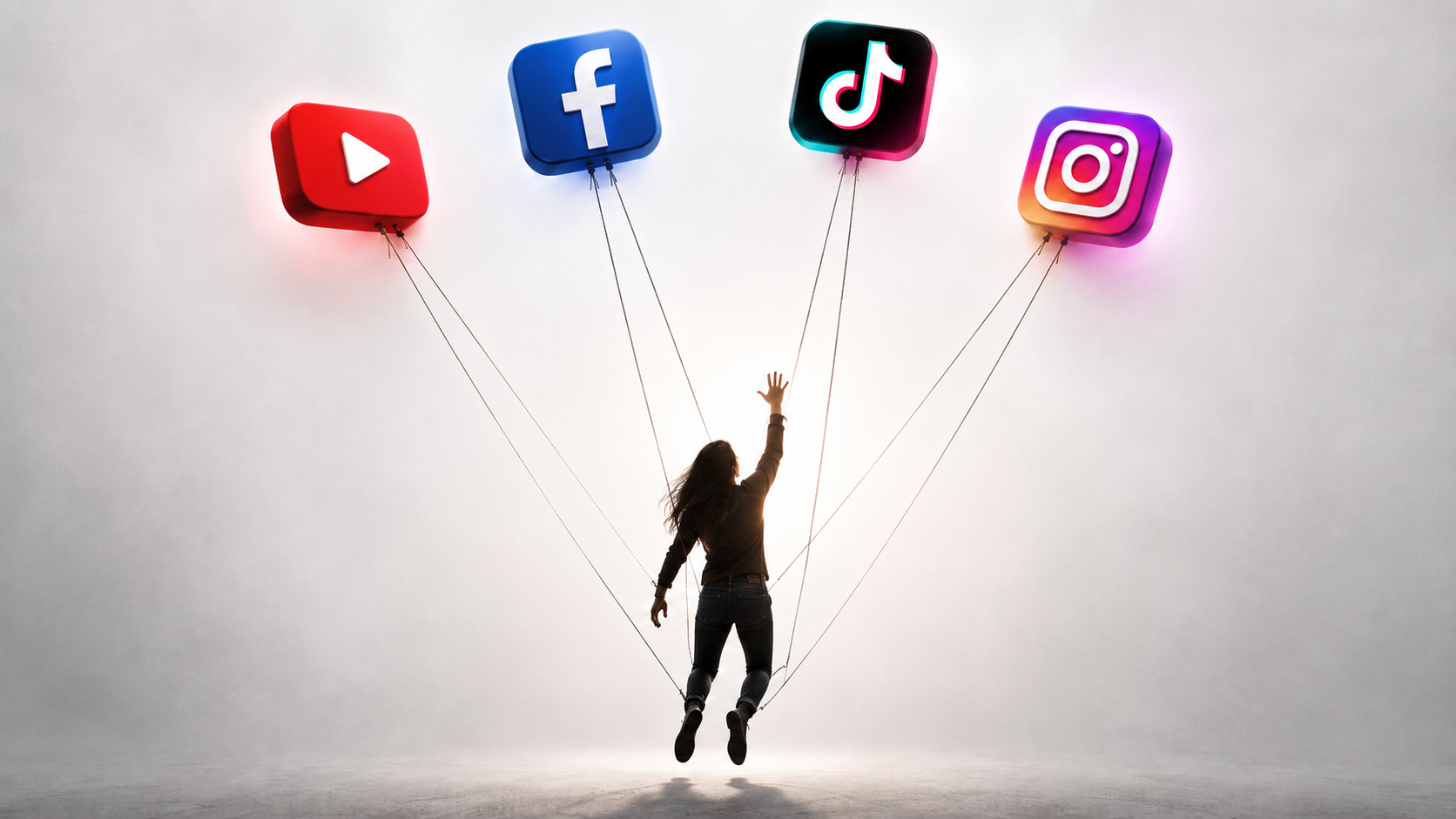
YouTube. Meta. TikTok. Instagram.
They don’t just host your content.
They own the relationship between you and the people who chose to follow you.
Your subscribers live in their database, not yours. Your income flows through their systems. Your visibility is controlled by an algorithm you have no access to and no influence over.
And when something goes wrong, and it does go wrong, every single day for someone, there is no one to call.
No appeal process that actually works. No accountability.
Just a notification and a door that’s already closed.
That is not a platform relationship. That is a dependency relationship.
And dependency, engineered deliberately by the party holding the power, is a control tactic.
Sound Familiar?
Think about isolation.
One of the first things an abusive dynamic does is separate you from your support network.
When a platform removes your account, you lose access to the community that chose you. You are cut off from the people you built trust with, often with no way to reach them.
The followers belong to the platform.
The relationship was always theirs to end.
Think about economic control.
Financial dependency on a single source controlled by someone who does not have your interests at heart is one of the most effective ways to keep someone compliant.
Creators know this intimately.
You adjust your content to stay monetised. You soften your edges. You avoid topics that might trigger demonetisation. You make yourself smaller to stay safe.
That is not creative freedom. That is management through economic fear.
Think about the absence of recourse.
In healthy relationships and healthy systems, there is accountability. There is somewhere to go when something goes wrong. There is a process, a voice, a path to resolution.
Platform governance offers none of that at scale.
You are not a person to them. You are a content unit generating engagement metrics.
When you become a problem, you are removed. The harm is minimised. The decision is rarely explained.
And the people watching learn the lesson: stay compliant or lose everything.
Let Me Be Clear
I am not saying that building an audience on a platform is equivalent to surviving abuse.
It is not. The stakes are different and I hold that distinction carefully.
What I am saying is that the mechanism is recognisable.
And once you see it, you cannot unsee it.
So What Does Reclaiming Actually Look Like?
The question that follows is the same question I work with in my practice every day.
Not just how do we get out, but what does it actually mean to reclaim sovereignty?
To own your voice, your relationships, your livelihood in a way that nobody can take from you overnight?
The answer in both contexts is the same in principle, even if the path looks different.
You build on ground that you own.
You hold your own relationships. You create structures that cannot be dismantled by someone else’s decision. You stop asking permission to exist from people who were never invested in your wellbeing.
For creators, that means:
- Owning your audience relationship through your email list
- Your website as your home, platforms as your distribution channels
- Understanding that what you build on rented infrastructure is never fully yours
For anyone rebuilding their life and their professional identity after a period of someone else holding the power:
The same principle applies.
Start with what you own. Build outward from there. Do not hand the keys to your livelihood to any single entity, platform or person, who has no accountability to you.
The creators I read about this morning had done nothing wrong.
They had built something real and valuable over years and decades. And they lost it because they built it on ground they didn’t own, in a relationship that was never equal, with a partner who was never accountable.
That story deserves more than a frustrated post on X.
It deserves a framework. And we already have one.
Here’s Your Invitation
If any of this has landed for you, whether you’re a creator, someone rebuilding after a difficult chapter, or simply someone who has felt the quiet cost of building your life on someone else’s terms, I’d love to continue this conversation.
Book a 1:1 session with me and let’s look at where you’re building, what you actually own, and what it would mean to start from ground that’s truly yours.
You’ve built enough for others.
Let’s build something that belongs to you.
Much love
Lyndal…
xx